
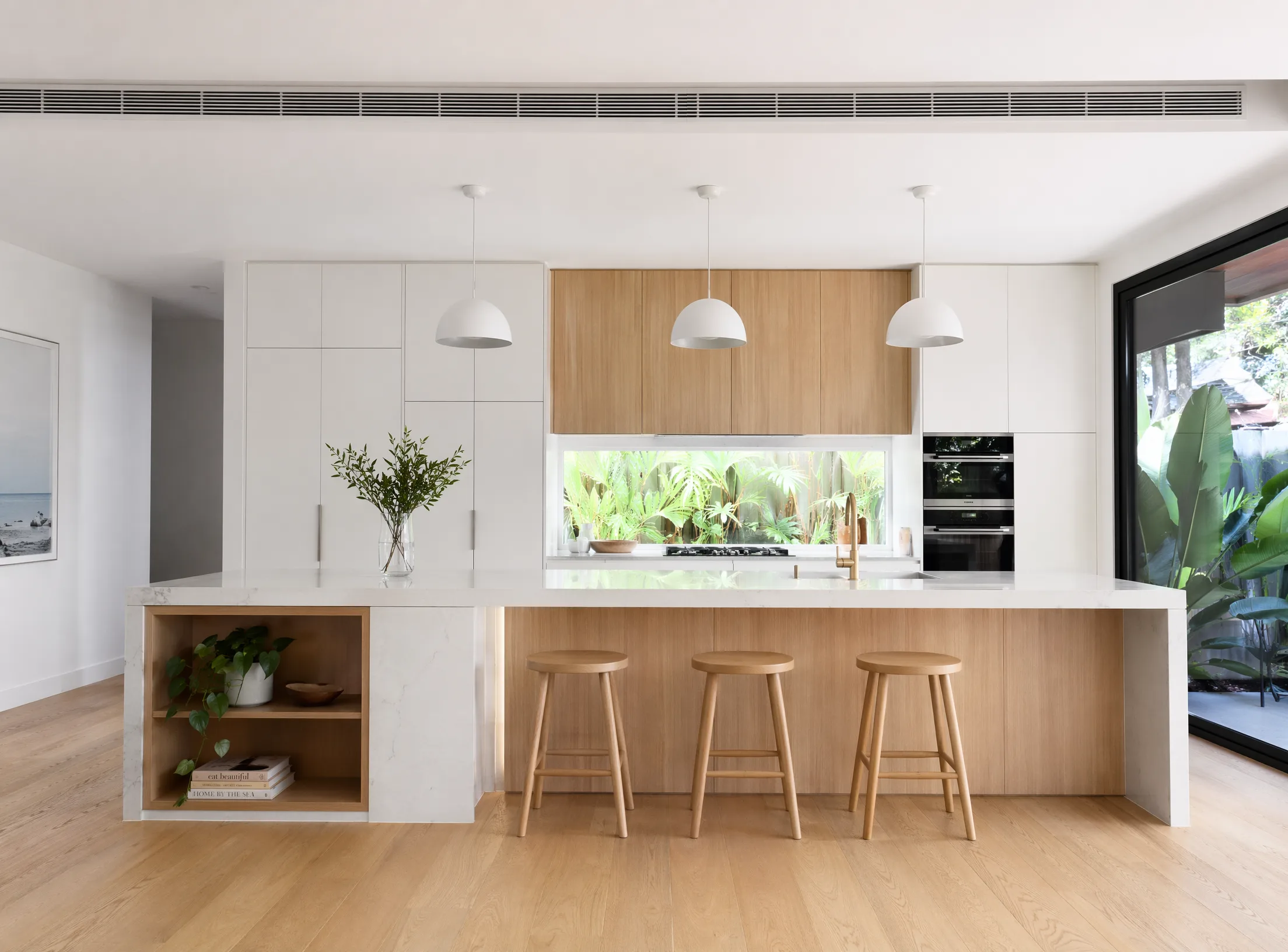
The kitchen island bench has become Perth's most requested kitchen feature — and also one of the most commonly designed incorrectly. Getting the size, clearance, seating height and storage configuration right makes the difference between an island that transforms how you use your kitchen and one that makes it harder to move around. Here's what to know before you design yours.
The Critical Clearance Rules
The single most common mistake in kitchen island design is insufficient clearance between the island and the surrounding cabinets or walls. The minimum functional clearance is 900mm on all working sides of the island. Below this, you cannot open the dishwasher door and stand in front of it simultaneously — which defeats the purpose of the layout.
For a kitchen that entertains regularly, or where two people cook together, 1,050–1,200mm is the recommended clearance. This allows two people to pass each other without contact, and allows the dishwasher, oven and fridge doors to be open simultaneously without creating traffic jams.
On the seating side of the island — where bar stools will be positioned — allow 300mm from the edge of the overhang to the nearest adjacent wall or furniture. Less than this and the stools can't be pushed back comfortably when guests stand.
Standard Island Dimensions
The most common kitchen island sizes in Perth homes:
- Small island: 900mm x 900mm — the minimum practical size. Works in a kitchen with generous clearance but limits functionality.
- Medium island: 900mm x 1,500mm — accommodates a prep sink, allows 2–3 bar stools on the seating side.
- Large island: 900mm x 2,100mm — the most common size in Perth's prestige kitchen renovations. Allows 3–4 stools, integrated prep sink, and meaningful storage below.
- Statement island: 1,000mm+ wide x 2,400mm+ long — typically with waterfall stone edges and an island bench that reads as the architectural centrepiece of the room.
Seating Height — Bench or Bar?
There are two seating configurations for kitchen islands:
Bench height (900mm benchtop, 650mm stool): The conventional dining height. More comfortable for longer meals. Works better when the island is also used as a dining table. The benchtop and the seating surface are the same height.
Bar height (overhang at 1,050mm–1,100mm, standard 750mm bar stool): Creates a visual separation between the kitchen work surface and the seating area. More common in contemporary Perth kitchens with a dedicated dining table elsewhere. The seating overhang is raised, with the base cabinetry at standard 900mm bench height.
What Goes Underneath
The storage below an island bench is often poorly considered. Common configurations that actually work:
- Deep drawers (3 or 4 drawers per half): The most practical configuration for pot, pan and dry goods storage. Full-extension drawers that don't require crouching to access.
- Pull-out shelves: For awkward items — large pots, stand mixer bowls — that don't suit drawers.
- Appliance garage on the island face: Roll-up or lift-up door concealing an appliance stored on the bench surface at the island end. Keeps the bench clear while keeping the appliance accessible.
- Wine rack: For islands used in a dining/entertaining context, an integrated wine rack in the island base is functional and looks deliberate.
Benchtop Materials for Perth Islands
The island benchtop typically gets more scrutiny than any other surface in the kitchen — it's the centrepiece. For Perth kitchens in 2026:
- Engineered stone (Caesarstone, Silestone): The most popular choice. Non-porous, low-maintenance, available in patterns that replicate marble. Avoid veined patterns with very thin veins — they show scratches more readily.
- Sintered stone (Dekton, Neolith): The premium choice. Harder than engineered stone, more resistant to heat and UV. Required for outdoor islands.
- Timber: Adds warmth but requires ongoing maintenance (oiling) and is not heat or scratch resistant. More common as a secondary surface — an end section of the island in timber, with stone on the main bench.
Waterfall Edges
A waterfall edge — where the benchtop material continues vertically down the ends of the island to the floor — is the most requested aesthetic detail in Perth island benches in 2026. It makes the island read as a monolithic object rather than a cabinet with a benchtop. Engineered stone waterfalls require careful pattern matching at the mitre joint; this is worth asking your cabinet maker and stonemason about explicitly before committing.
Our design team works through island configuration with every client at the free in-home consultation. Book yours or call 0417 151 309 to discuss your kitchen island project.