
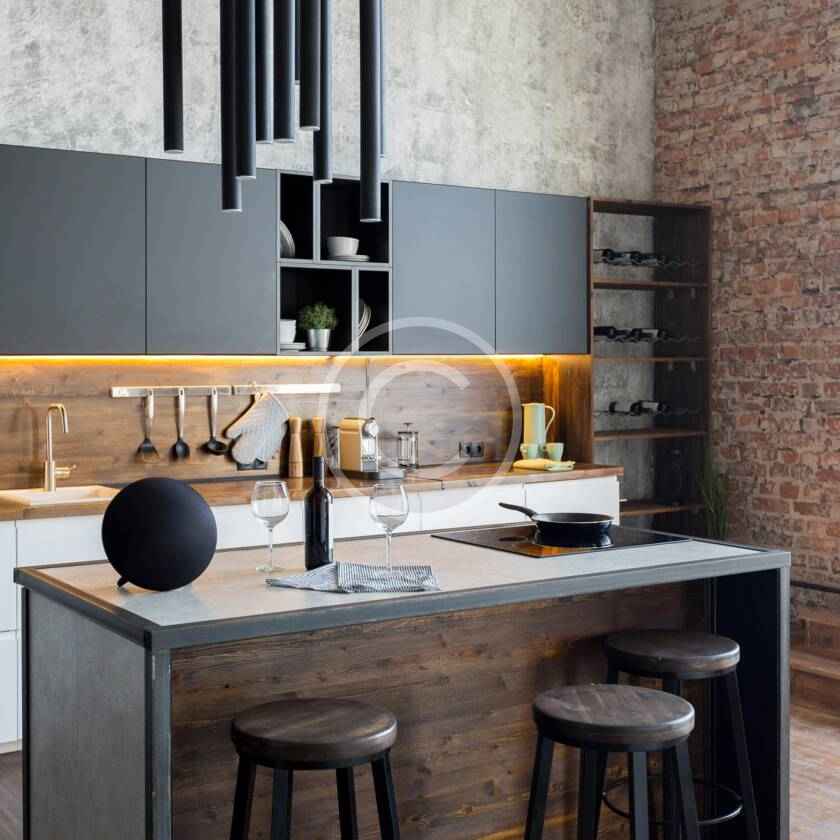
A kitchen layout is not just about fitting the appliances in — it determines how efficiently you move through the space, how well the kitchen serves for entertaining, and how much you'll enjoy cooking in it every day. Getting the layout right at the planning stage costs nothing. Getting it wrong costs a second renovation.
The Work Triangle — and When It Still Applies
The kitchen work triangle — the relationship between the sink, stove and refrigerator — has been a design principle since the 1940s. The idea is simple: these three points form the core workflow of cooking, and keeping the distances between them short (each leg ideally 1.2–2.7 metres) reduces unnecessary movement.
The work triangle still applies in single-cook kitchens. In larger homes with multiple cooks or a scullery behind the main kitchen, a zone-based approach is more relevant: a preparation zone (sink, chopping bench), a cooking zone (hob, oven, microwave), and a storage zone (pantry, refrigerator). Each zone should flow logically into the next.
The Major Layout Types
L-Shaped Kitchen
Two cabinet runs meeting at a corner. Works well in open-plan living where the kitchen connects to a dining or living area. The corner can be lost space without proper planning — lazy Susans or pull-out corner carousels recover most of it. A good starting point for medium-sized kitchens in Perth's post-war housing stock.
U-Shaped Kitchen
Three sides of cabinetry forming a U. Maximum storage and bench space. Works best in dedicated kitchen rooms with generous floor area — the minimum practical width between the two facing runs is 1.2 metres for comfortable movement. Ideally 1.5–1.8 metres if two people will cook together. Common in Nedlands and Dalkeith homes with larger kitchen footprints.
Galley Kitchen
Two parallel runs facing each other. Extremely efficient workflow — everything is within reach. Works well in apartments and homes where the kitchen is a separate room rather than part of an open-plan living area. The key constraint: avoid making it a thoroughfare. If it's a walkthrough between two spaces, the traffic disrupts the cooking zone.
Kitchen with Island
Any of the above configurations with a freestanding island added. The island has become Perth's most requested kitchen feature — it adds prep space, seating, storage and visual presence. Critical clearance rule: 900mm minimum between the island and any fixed cabinetry run. 1.2 metres is better if the kitchen entertains regularly. Below 900mm and the space becomes unusable when the dishwasher door is open.
Common Layout Mistakes
Undersized Drawers
Lower cabinet space is most useful as drawers, not as doors-with-shelves. Three deep drawers outperform two shelves behind a door in nearly every practical test — pots, pans and ingredients are accessible without crouching and searching. If your current kitchen has mostly lower doors, converting to drawers in a renovation makes a significant difference to daily usability.
Overhead Cabinets Too Low
Standard overhead cabinet height is typically 600mm, mounted 450–550mm above the benchtop. In rooms with 2.7m or 3m ceilings — common in Perth's Federation and post-war homes — there's often 400mm+ of dead space between the top of the overhead cabinets and the ceiling. This can be used for bulkhead storage, or the cabinets can be extended to ceiling height for a cleaner look and significantly more storage.
Inadequate Landing Zones
Every major appliance needs a landing zone — bench space immediately adjacent where items can be placed while opening or using the appliance. Minimum 400mm beside an oven. 300mm beside a refrigerator. Without these, you'll end up walking across the kitchen every time you take something out of the oven.
Designing for How You Actually Cook
The most useful exercise before finalising a layout brief is to trace your typical cooking sequence in your current kitchen — from retrieving ingredients, to prep, to cooking, to plating, to serving. Note where you backtrack, where the traffic jams occur, and where you run out of bench space. Your new layout should directly address those friction points.
At PCS Cabinets, our design team works through this exercise with every client before we put pen to paper. A kitchen designed around your actual cooking habits will serve you better for the 15–20 years it will last than one designed to a generic brief.
Start your design conversation — free in-home consultation across Perth.